
Whalefall Review: An immersive survival thriller with complex relationships
Whalefall delivers an immersive survival thriller, with striking underwater visuals and sound design complementing its exploration of grief and a complicated father-son relationship. However, uneven pacing, disruptive flashbacks and underdeveloped emotional moments prevent the film from reaching its
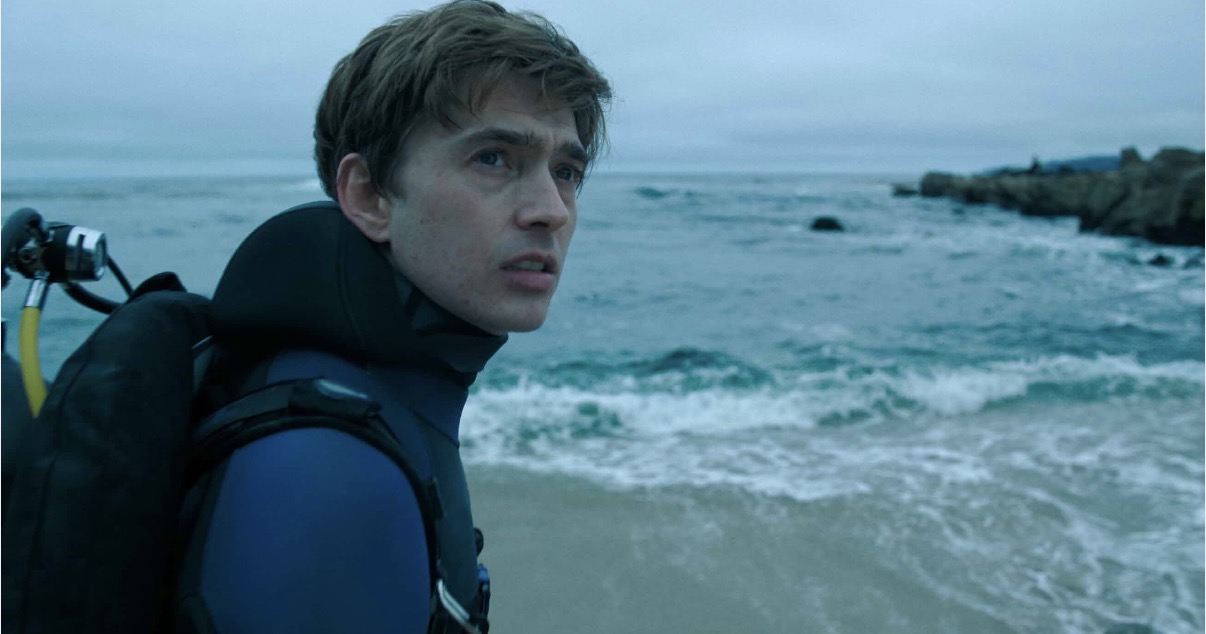
Directed by Brian Duffield, Whalefall is a survival thriller that combines the terrifying prospect of being trapped inside a whale with a deeply personal exploration of grief, family and the lasting impact of parental relationships. Starring Austin Abrams as Jay Gardiner and Josh Brolin as his father, Mitt, the film attempts to balance the physical struggle for survival with the emotional turmoil of a son confronting his complicated relationship with his late father.
One of the strongest elements of Whalefall is its exploration of the father-son relationship. Beneath its unusual survival premise lies a story about unresolved conflict, grief and the difficulty of coming to terms with someone who has shaped your life, even when that relationship has been painful. As Jay fights to survive inside the whale, memories of his father force him to confront feelings he has struggled to process. The film recognises that grief is rarely straightforward, particularly when love, resentment and regret coexist. This emotional foundation gives the story greater meaning than a conventional survival thriller, even if its execution occasionally falls short of its ambitions.
The film is particularly effective in its visual presentation and sound design. The underwater sequences create an immersive and claustrophobic atmosphere, making Jay’s predicament feel increasingly desperate as his oxygen supply dwindles. The combination of unsettling imagery, confined spaces and carefully constructed sound heightens the tension, making Whalefall an especially compelling experience in 4DX. The physical sensations of the format complement the film’s perilous underwater setting, drawing the audience further into Jay’s struggle and reinforcing the scale of his isolation.
Another strength is the film’s willingness to look beyond the immediate question of survival. Jay’s journey is not simply about escaping the whale; it is also about confronting his past and understanding the complicated legacy his father has left behind. This gives the narrative an emotional dimension that distinguishes it from other survival films. The premise provides an inventive framework for exploring how unresolved experiences can continue to shape us long after the people involved are gone.
However, Whalefall does not always strike the right balance between its survival narrative and its emotional ambitions. Some of the flashbacks interrupt the pacing, occasionally pulling the audience away from the urgency of Jay’s predicament. Although these sequences are essential to understanding his relationship with Mitt, the transitions between the underwater action and memories of the past could have been smoother. A more natural integration of these two elements would have allowed the emotional revelations to build alongside the tension rather than sometimes feeling like interruptions to it.
More importantly, I would have liked the film to explore the father-son relationship in greater depth. While this relationship is central to the story, certain emotional moments and revelations could have carried considerably more weight with additional development. The film introduces compelling ideas about grief, regret and the influence parents have on their children, but some of these themes feel as though they could have been explored more fully. Greater insight into the characters’ relationship might have made Jay’s emotional journey more affecting and the eventual resolution more powerful.
Ultimately, Whalefall is an ambitious survival thriller that finds its greatest strength in the emotional story beneath its extraordinary premise. Its immersive underwater visuals, effective sound design and exploration of grief make for a distinctive cinematic experience, particularly in 4DX. Nevertheless, uneven pacing and an underdeveloped father-son relationship prevent the film from reaching the emotional heights it aspires to.
Despite these shortcomings, Whalefall offers more than a conventional fight for survival. It is a film about the complicated relationships we inherit, the unresolved feelings we carry and the challenge of finding closure when the opportunity for reconciliation has passed. With more measured pacing and deeper character development, its emotional core could have been even more powerful.